

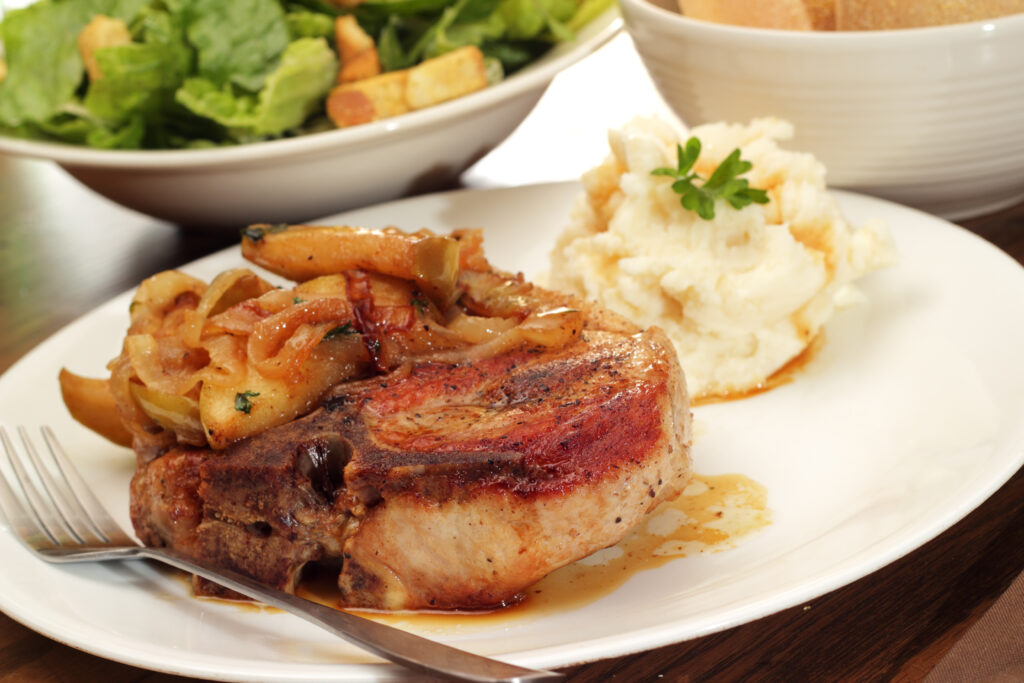

These tender, juicy pork chops are cooked sous vide for unmatched flavor and texture. They’re infused with the cozy, slightly sweet flavors of apple cider, fresh herbs, and garlic, then seared to a golden crust after their gentle bath. Topped with a luscious apple cider reduction glaze and caramelized apples, this dish is the perfect mix of savory and sweet—a comforting yet sophisticated meal, perfect for fall or whenever you want an easy, special treat.
First, start with a good-quality, thick, bone-in chop. Pork has come a long way from the days when the slogan was “the other white meat.” Decades ago, when pork producers coined that slogan, they were seeking to increase marketablity and versatility of pork by comparing it to chicken. Pork producers attempted to breed all the fat out of pork, seeking a leaner, healthier product that could be compared to its poutry competition, but in the process, bred all the taste and juiciness out of the meat as well.
Today’s pork is a far cry from the dry, overcooked slabs we remember from the past. High-quality, flavorful pork is now available from a variety of heirloom producers at your local butcher shop. Many upscale grocery stores also carry heirloom varieties, making them more accessible.
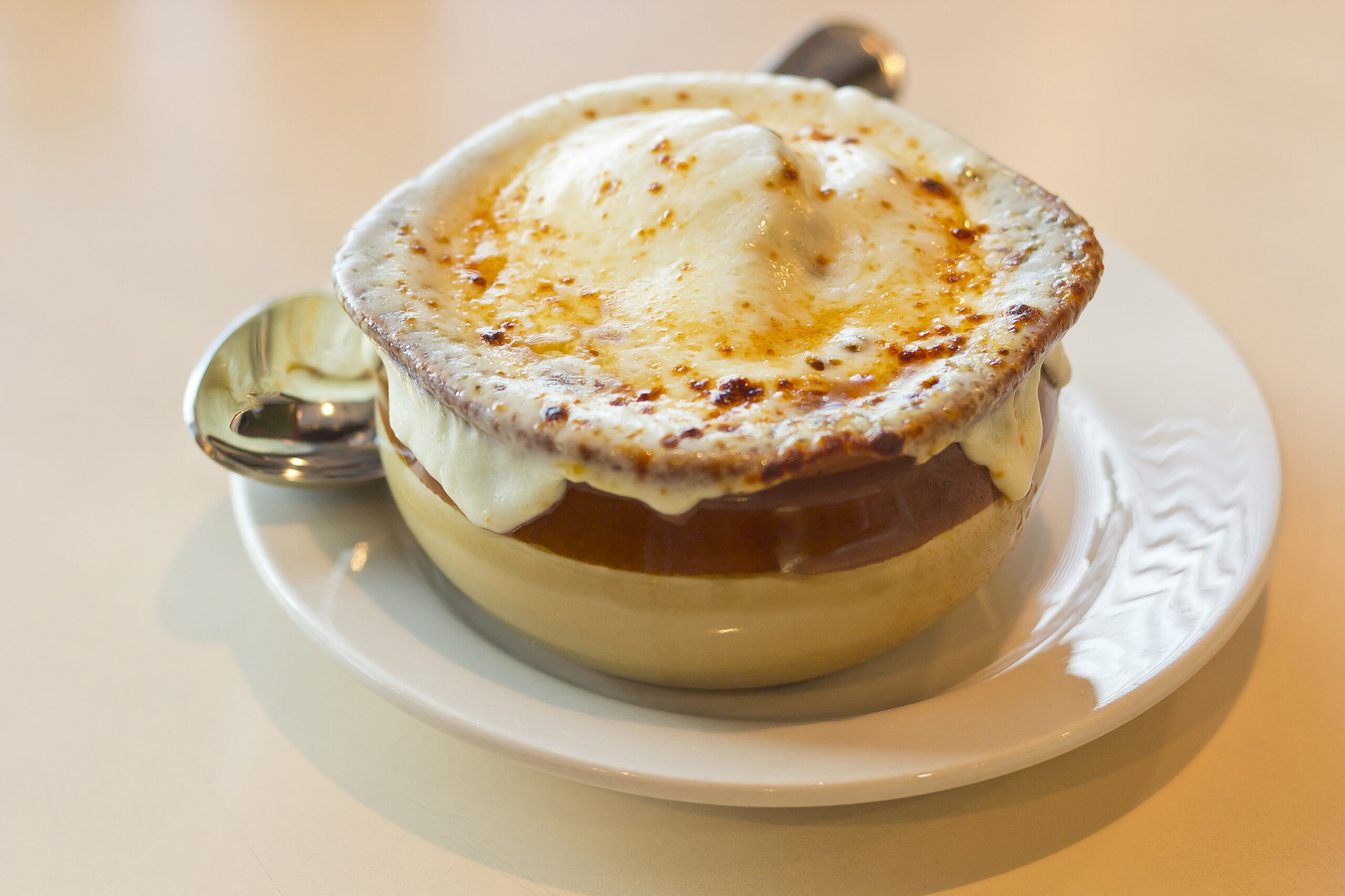

Why Sous Vide?
Is sous vide really better than grilling or pan-searing? The truth is, there’s no definitive answer because it’s not about “better” or “worse.” It’s just another cooking method, a tool in your arsenal to use when you’re aiming for a particular outcome.
Sous vide gives you meat that’s perfectly cooked from edge to edge, consistently and reliably. You’ll enjoy pork chops that are juicier than ever before. Plus, it’s simple to prepare: just choose your temperature, place the pork in with the immersion circulator, sear it, and serve.
What Temperature is Proper to Sous Vide Pork?
Traditional high-heat cooking requires precise timing and temperature to get the desired doneness. Sous vide cooking, however, is much more forgiving since you cook at the exact temperature you plan to serve the meat. Temperature is the key factor here. By adjusting your sous vide cooker, you can prepare pork chops to a tender, pink, and juicy rare (130°F; 54°C) or a firm yet still moist well-done (160°F; 71°C).
Bear in mind that the hotter you cook, the more moisture you’re going to squeeze out of the pork.
Here’s a breakdown of the texture and juiciness you can expect at various temperatures:
- Rare (130°F; 54°C): The meat remains nearly raw. Muscle proteins have not started to contract much and will have a slippery, wet texture. The meat will be extremely juicy, but it’ll be hard to break down muscle fibers and the meat will take on a rubbery texture as you eat it, as the meat won’t have enough firmness to stand up to chewing.
- Medium-rare (140°F; 60°C): Muscle proteins have begun to tighten and firm up. You lose a bit of juice due to this tightening, but what you lose in juice, you gain in tenderness. This is my favorite temperature for pork chops. They come out extremely juicy and tender, but have a natural meaty bite to them, without the off-putting slipperiness of 130°F meat.
- Medium-well (150°F; 66°C): The muscle fibers continue to toughen up and expel juices. The pork will still be flavorful, but it’ll have lost a lot of its tenderness by this stage.
- Well-done (160°F; 71°C): The meat is completely well-done, with a texture that’s reminiscent of the pork chops I ate as a kid, albeit juicier than if they were cooked via more traditional methods.
How Long to Sous Vide? Can I go Too Long??
Sous vide cooking is definitely more forgiving than traditional methods, giving you a much larger window of time to achieve perfectly cooked meat—extending from mere seconds or minutes to several hours. However, it’s still possible to overcook or undercook. A general rule of thumb is to allow about 20 minutes of cooking time per half inch of thickness, adding an extra 10 minutes as a buffer. This ensures the meat reaches thermal equilibrium and cooks through to match the water bath’s temperature. While extended cooking won’t significantly reduce juiciness, over time the muscle proteins will break down too much, making the meat mushy and causing it to shred instead of tear when bitten.
For a 1 1/2″ thick chop, 1 hour is the minimum time needed to reach thermal equilibrium. At 4 hours, the meat starts to lose some resilience, and by 8 hours, it becomes tender enough to be hand-shredded. To achieve the best balance of bite, juiciness, and texture, I recommend keeping your Sous Vide bath under 4 hours.
A Few Notes on Sous Vide Bags
I usually use vacuum-seal bags for sous vide cooking, but high-quality zipper-lock bags can work just as well. To seal a zipper-lock bag, use the displacement method: place the pork in the bag and close it almost completely. Slowly lower the bagged pork chops into a pot of water, allowing the water pressure to push out the air through the top. Once most of the air is out, carefully seal the bag just above the waterline. A properly sealed bag should sink.
No matter which bag you pick, fold the top over itself to create a hem before adding the pork. This keeps juices off the edges, ensuring a proper seal and reducing contamination risks. Place the pork chops in a single layer inside the bag (don’t overcrowd it; use more bags if needed), and toss in any aromatics like fresh herbs if you’re using them. Unfold the edge before sealing the bag.
Apple Cider Sous Vide Pork Chops
Description
Apple Cider Sous Vide Pork Chops
Ingredients
For the Sous Vide Pork Chops
For the Apple Cider Sauce
Instructions:
For the Sous Vide Pork Chops
-
Place Sous Vide controller into a container of water and pre-heat to desired temperature. (Recommended: 140°F)
-
Season the pork chops on both sides with salt and pepper to taste. Place each chop in a separate plastic bag, add 2 sprigs of thyme and a tablespoon of butter to each bag. Vacuum seal the bags and transfer them to a preheated water bath.
-
Allow pork chops to remain in the water bath for up to 4 hours. Remove from bath, cut the bags open being careful to reserve the liquids accumulated in the bags. (We'll use the reserved liquids in the sauce later). Set pork chops aside and pat dry with paper towels.
-
Preheat a large heavy-bottomed skillet, cast-iron pan, or grill until hot. Sear the pork chops on each side for one minute. Transfer them to a plate or carving board and cover with foil to let them rest.
For the Apple Cider Sauce:
-
In a medium saucepan or skillet, melt the butter and add the apples. Cook the apples until the juices begin to brown and the apples are beginning to soften.
-
Add the garlic, sugar, apple cider, cider vinegar, mustard, and about 1/2 cup of the juices from the pork chops to the pan with the apples. Simmer for a few minutes until it reaches a sauce-like consistency then serve with the apples on top of the sous vide pork chops.
Equipment
Affiliate Disclosure: This post contains Amazon affiliate links, i.e., when you buy any product using the links below, we get commissions. but it doesn’t cost you anything extra. If you do purchase any product using the given links, we thank you in advance!
Nutrition Facts
Servings 4
- Amount Per Serving
- Calories 409kcal
- % Daily Value *
- Total Fat 24g37%
- Saturated Fat 12g60%
- Cholesterol 127mg43%
- Sodium 221mg10%
- Potassium 665mg19%
- Total Carbohydrate 19g7%
- Dietary Fiber 3g12%
- Sugars 14g
- Protein 30g60%
- Vitamin A 590 IU
- Vitamin C 8 mg
- Calcium 35 mg
- Iron 1 mg
* Percent Daily Values are based on a 2,000 calorie diet. Your daily value may be higher or lower depending on your calorie needs.
